Modifying high-pressure hightemperature stirred autoclave for corrosion inhibitor evaluation
Abstract
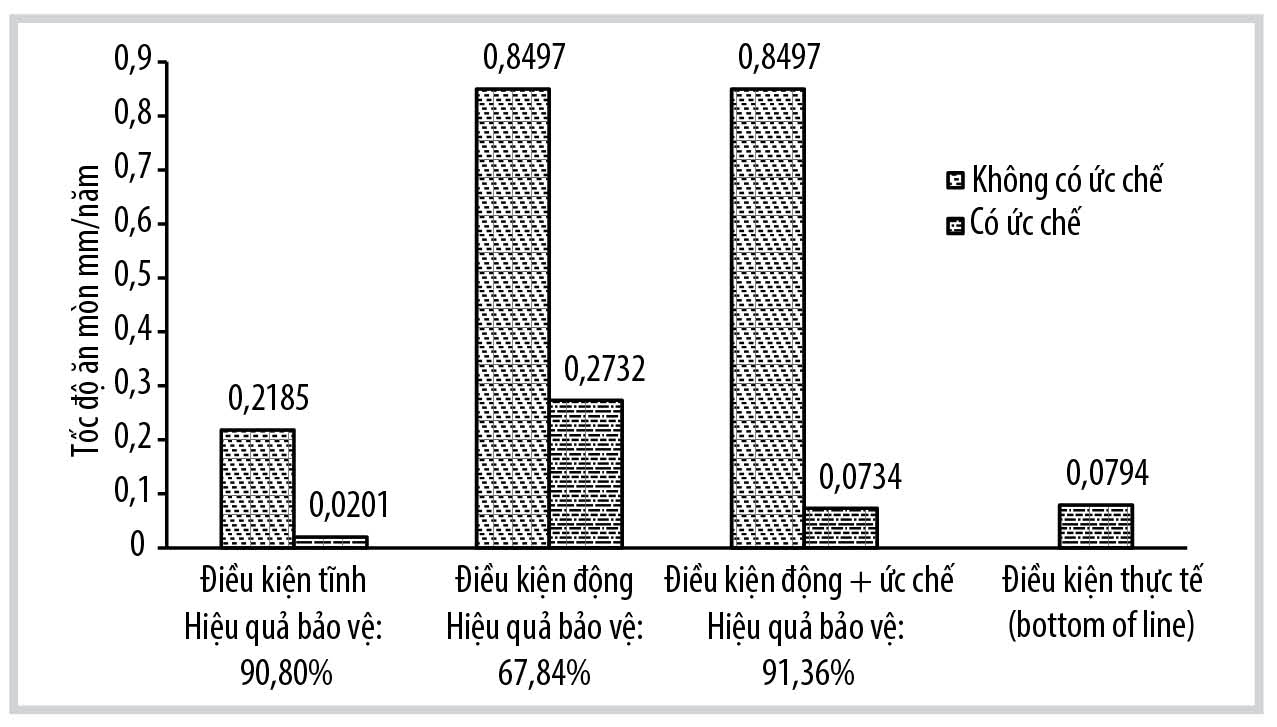
A high-pressure high-temperature stirred autoclave (HPHTSA) is modified based on the rotary cage autoclave (RCA) and stirred autoclave (SA) to evaluate corrosion inhibitors in the laboratory. This autoclave can simulate operational conditions in oil and gas pipelines, enduring high-temperature high-pressure conditions, and withstanding corrosive agents such as CO2, H2O, and H2S. It is equipped with a stirring shaft and blades to ensure uniformity of the solution in the reaction vessel. Importantly, it features a sample mounting system with a rotating cage structure consisting of two tiers. A water-dispersible and oil-soluble corrosion inhibitor was evaluated using the high-pressure high-temperature stirred autoclave under both static and dynamic (rotating) conditions. At dynamic conditions, the testing system simulates gas and liquid environments, similar to the conditions at the top and bottom of oil and gas transportation pipelines.
References
Sankara Papavinasam and R.Winston Revie, “Review of testing methods and standards for oilfield corrosion inhibitors”, EUROCORR 2004: Long term prediction and modeling of corrosion, January 2004.
Y.Wu, Corrosion inhibitor screening tests and selection for field applications. United State, 1994.
NACE, “Technical committee report, laboratory test methods for evaluating oil field corrosion inhibitors”, 1996.
J.D. Garber, R.D.Braun, J.R.Reinhardt, F.H.Walters, J.H.Lin, and R.S. Perkins, Comparison of various test methods in the evaluation of CO2 corrosion inhibitors for downhole and pipeline use. United State, 1994.
NACE Technical Committee Report, Wheel Test Method Used for Evaluation of Film Persistent Inhibitors for Oilfield Applications, NACE Technical Publication 1D 182, Materials Performance, 121982, p. 45, 1982.
ASTM, “Standard guide for evaluating and qualifying oil field and refinery corrosion Inhibitors in the laboratory”, 2001. DOI: 10.1520/G0170-06R20E01.
Dharma Abayarathna, Ali R. Naraghi, and Robert W. Buchholz, “Inhibitor evaluations and correlation of laboratory and field data in CO2 environments”, Corrosion 99, San Antonio, Texas, 25 - 30 April 1999.
Yan Milin, Zhao Guoxian, and Li Pingquan, “Modification of a stirring autoclave to RCE autoclave and its application”, Corrosion 99, San Antonio, Texas, 25 - 30 April 1999.
Y. P. Asmara, Agus Geter, N. M. Zuki, J. Jamaludin, S. Januar, B. Dandi, T. Kurniawan, M. C. Ismail, “Corrosion inhibition of carbon steel in oil and gas environments”, International Journal of Advanced and Applied Sciences, Volume 3, Issue 5, pp. 88 ‐ 91, 2016.
Zhen Li and Jiding Zhang, “The influence of flow velocity on electrochemical reaction of metal surface”, IOP Conference Series Materials Science and Engineering, Volume 274, 2017. DOI: 10.1088/1757-899X/274/1/012098.
1. The Author assigns all copyright in and to the article (the Work) to the Petrovietnam Journal, including the right to publish, republish, transmit, sell and distribute the Work in whole or in part in electronic and print editions of the Journal, in all media of expression now known or later developed.
2. By this assignment of copyright to the Petrovietnam Journal, reproduction, posting, transmission, distribution or other use of the Work in whole or in part in any medium by the Author requires a full citation to the Journal, suitable in form and content as follows: title of article, authors’ names, journal title, volume, issue, year, copyright owner as specified in the Journal, DOI number. Links to the final article published on the website of the Journal are encouraged.